
Cell-Free Gene Synthesis
High-Speed, Sequence-Perfect DNA Production at Scale
Gene Synthesis Reimagined: No Cells, No Delay
Elegen’s patented gene synthesis platform delivers long, sequence-perfect DNA without the biological constraints of bacteria. By eliminating E. coli from the workflow, we bypass the laborious, multi-day cloning steps that bottleneck traditional synthetic biology.
All ENFINIA™ DNA products are manufactured on Elegen’s GEN II Platform. Our process begins with microfluidic oligonucleotide synthesis, in which >5,000 oligos are synthesized simultaneously on a single chip. These oligos feed directly into our downstream cell-free cloning process.
The Power of Automated Workcells
The process follows two streamlined steps: DNA Assembly and Cell-Free Cloning.
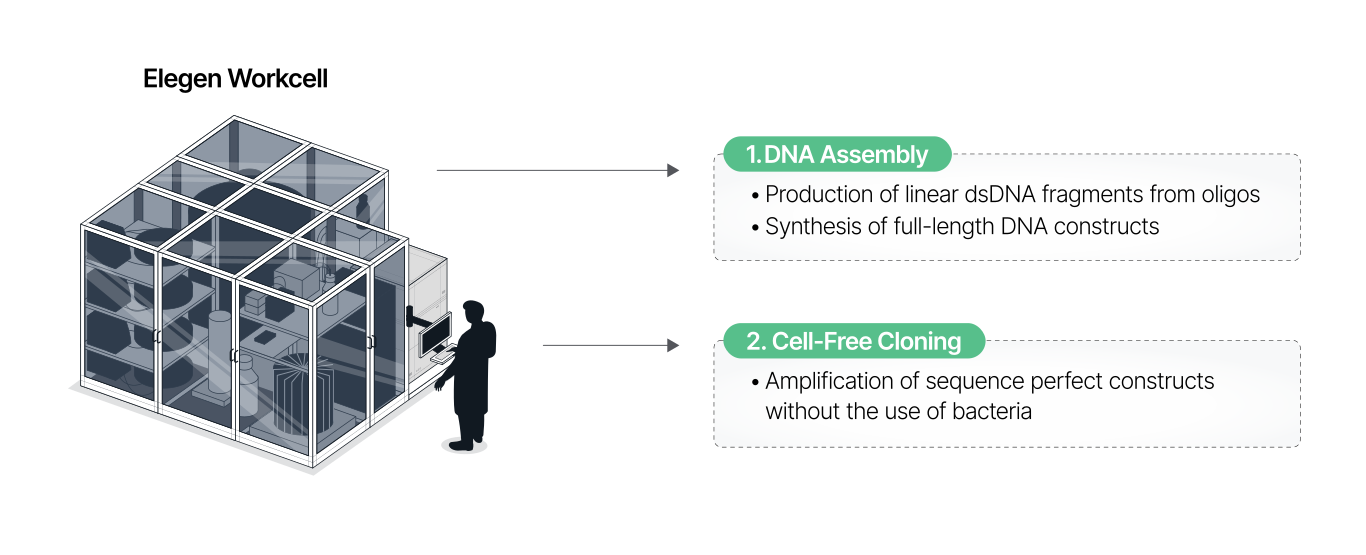
24/7 Cell-Free Synthesis. Elegen’s automated workcells execute end-to-end DNA assembly and cell-free cloning around the clock for rapid, scalable production.
Step 1: Precision DNA Assembly
Conventionally, DNA fragments are built via Polymerase Cycling Assembly (PCA). However, PCA is inherently prone to hybridization errors; oligos often misanneal to partially complementary sequences, a risk that scales with sequence complexity.
To solve this, Elegen developed Directed, High-Specificity DNA Assembly. This proprietary approach reduces oligo pool complexity without sacrificing throughput. By lowering the risk of mis-hybridization, we build complex fragments that traditional PCA methods simply cannot.
Since ENFINIA Linear DNA can be used immediately without cloning, it is the fastest and most cost-effective DNA for researchers (see graphic).
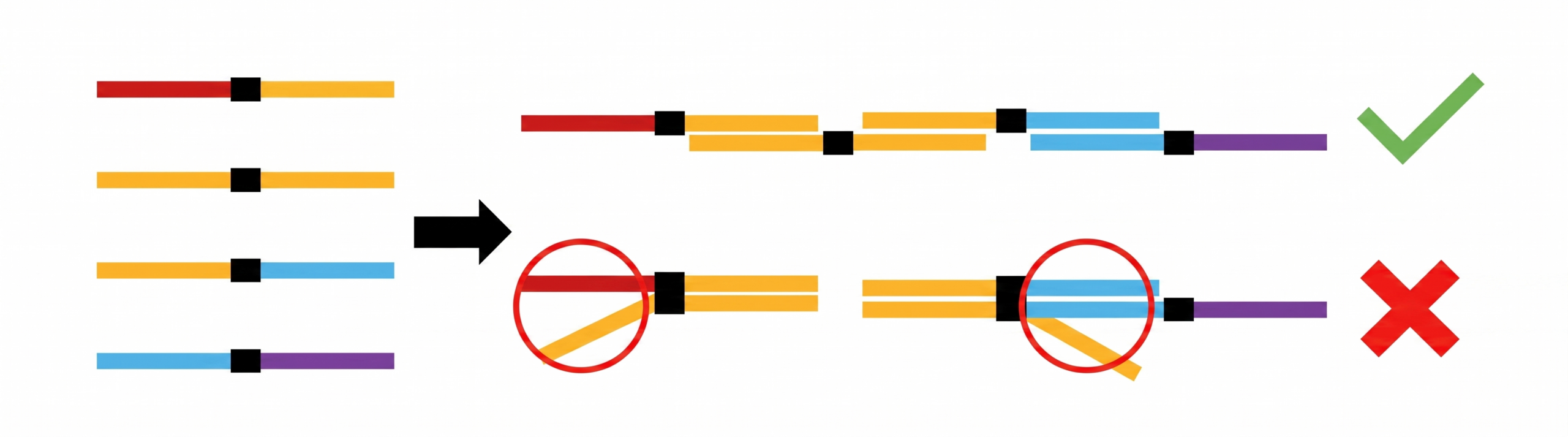
Assembly of Oligos into DNA Fragments
Top: When assembling DNA from a set of oligos with overlapping sequences, the ideal result is to have the oligos hybridize in the correct order, so that the DNA fragment has the correct sequence.
Bottom: Hybridization errors can occur when oligos misanneal to partially complementary sequences, resulting in non-specific products.
Once fragments are synthesized, they are joined into full-length constructs that can span several kilobases. While this process generates a diverse sequence pool, our next phase selectively enriches only the sequence-perfect molecules for final amplification.
Step 2: Rapid Cell-Free Cloning
In the second step of the gene synthesis workflow, Elegen employs cell-free cloning to isolate and amplify a perfect sequence. In traditional workflows, identifying the correct sequence requires transforming DNA into bacteria, plating, colony picking, and overnight culturing. This adds days to timelines and introduces the risk of biological contamination.
Elegen replaces biological systems with high-precision chemistry. Our proprietary cell-free process selectively amplifies sequence-perfect molecules by leveraging molecular barcoding to enrich the exact target sequence. We then verify the identity of every construct via long-read sequencing, ensuring full-length sequence integrity across the entire molecule.
- 99.999% Per-Base Accuracy: Clonal-grade quality without the clone*
- NGS Verified: Every sequence undergoes long-read NGS to ensure high accuracy and purity—a standard of QC that other fragment providers simply don’t offer.
- Unmatched Speed: Receive NGS-verified DNA in days, not weeks.
*Learn about how we calculate error rate.
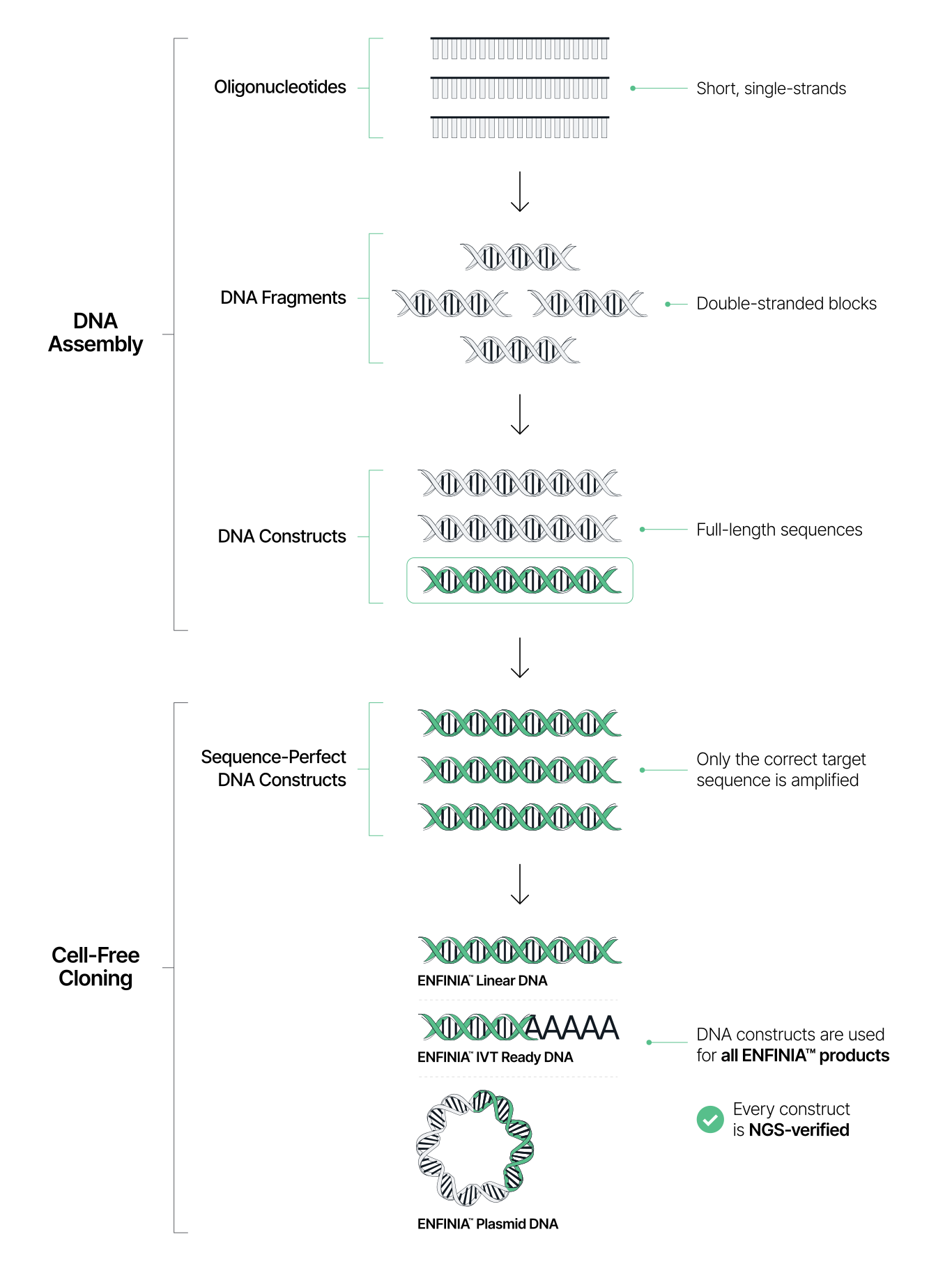
High-Fidelity Synthesis Workflow
Elegen’s streamlined process ensures that sequence-perfect constructs are used in final ENFINIA DNA products.
Fidelity at Any Volume
We offer flexible yield options for ENFINIA DNA without sacrificing fidelity. Unlike competitors who rely on bulk PCR amplification—which can introduce stochastic errors—we scale by increasing the number of assembly reactions de novo.
The result? Higher yields with the same industry-leading accuracy, ensuring your scale-up is reliable.
On the GEN II platform, DNA assembly and cloning are driven by specialized, high-throughput workcells that each occupy <100 sq. ft. of lab space. These compact robotic units integrate liquid handlers, thermal cyclers, centrifuges, and plate readers to produce 1,000s of genes per week with minimal human intervention.